Goodbye Toxic Heroes: Why Indian Gen Z is Swapping Bollywood Melodrama for "Soft Masculinity"
For decades, the formula for a blockbuster Indian cinematic romance was carved in stone. It usually involved a hyper-masculine, brooding, slightly aggressive "alpha male" hero who treats love like a conquest. From the stalking normalized in 90s classics to the deeply polarizing, explosive anger of modern box-office hits like Kabir Singh and Animal, mainstream Indian cinema has long equated romance with dominance, possessiveness, and emotional unavailability.
But a quiet revolution is happening on the laptop and smartphone screens of Indian Gen Z and Millennial women. They are completely rewriting their watchlists, hitting "skip" on local toxic melodramas, and looking East.
Specifically, they are finding refuge in the thriving world of Thai Boys' Love (BL) dramas. The reason for this massive cultural migration? A desperate craving for soft masculinity and progressive romance shows.
The Exhaustion of the "Alpha Male" Trope
To understand why Thai BL is exploding in India, you first have to look at the exhaustion turning viewers away from local screens. While Bollywood and regional Indian cinema have made strides in indie spaces, the mainstream commercial juggernauts still heavily rely on old-school patriarchy wrapped in slick cinematography.
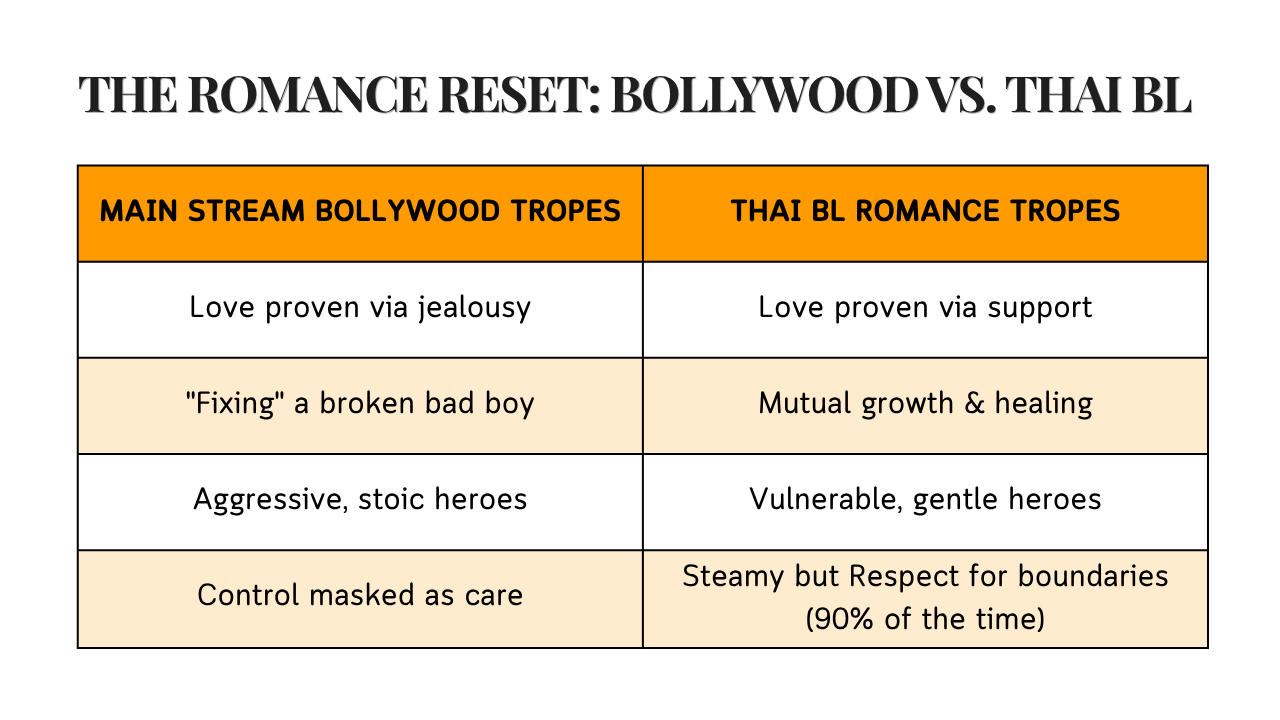
In these narratives, a hero's love is often proven through violence, jealousy, or intense emotional manipulation. For a generation raised on global conversations about mental health, green flags, and mutual consent, watching a male lead scream at his partner or control her life is no longer romantic—it’s exhausting.
Enter the Thai BL genre, which strips away these aggressive power dynamics entirely. By focusing on romance between two men, these shows bypass traditional, rigid heterosexual gender roles. There is no predetermined script dictating that one partner must be submissive while the other dominates. Instead, audiences are treated to something they rarely see in mainstream Indian media: complete emotional equality.
What is "Soft Masculinity" and Why is it Addictive?
Coined by media scholars tracking East and Southeast Asian pop culture, soft masculinity refers to a style of manhood that prioritizes emotional intelligence, vulnerability, tenderness, and aesthetic care over physical dominance or emotional stoicism.
In Thai workplace and university BLs, male characters are allowed to be complex, multi-dimensional human beings. Consider these stark contrasts:
Emotional Expression over Anger: In shows like Bad Buddy or My School President, when male leads face a misunderstanding, they cry, they articulate their hurt, and they actively communicate. They don't punch walls or smash bottles.
The Normalization of Comfort: Thai BL heroes are routinely shown taking care of one another—cooking meals, applying skincare, comforting each other through panic attacks, and openly verbalizing affection without fear of losing their "manliness."
Consent is King: The concept of enthusiastic consent is woven into the fabric of modern progressive romance shows. Boundaries are discussed, respected, and celebrated.
For Indian female viewers, watching men treat each other with profound gentleness offers a blueprint of what a healthy relationship should look like. It provides a safe, comforting space entirely free of the threat of gender-based hostility.
A Psychological Safe Haven for Indian Women
The massive shift from Bollywood toxic masculinity vs BL isn't just about entertainment preferences; it’s a psychological coping mechanism. Indian women navigate highly complex, sometimes deeply patriarchal social structures in their daily lives. When they turn on the television to unwind, they want an escape, not a reminder of toxic real-world dynamics.
Thai BL series like We Are or Cherry Magic Thailand offer what fans call "healing content." These workplace and campus comedies strip away the heavy, suffocating melodrama of traditional Indian soap operas and replace it with lighthearted, respectful, and genuinely joyful courtships.
The Watchlist Shift is Permanent
As Indian Gen Z and Millennials continue to vote with their clicks, streaming platforms and production houses are noticing. The meteoric rise of Asian dramas in India proves that the modern audience's values have fundamentally shifted.
Indian women are no longer willing to romanticize red flags just because they are wrapped in a catchy item song or backed by a superstar actor. They are choosing soft masculinity, equal partnerships, and emotional safety—even if they have to travel across subtitles to find it.
What do you think? Has your watchlist shifted away from mainstream Bollywood toward more progressive Asian dramas lately? Let's discuss in the comments below!
